
Rechargeable vs Disposable-Battery Hearing Aids: Which Suits You?
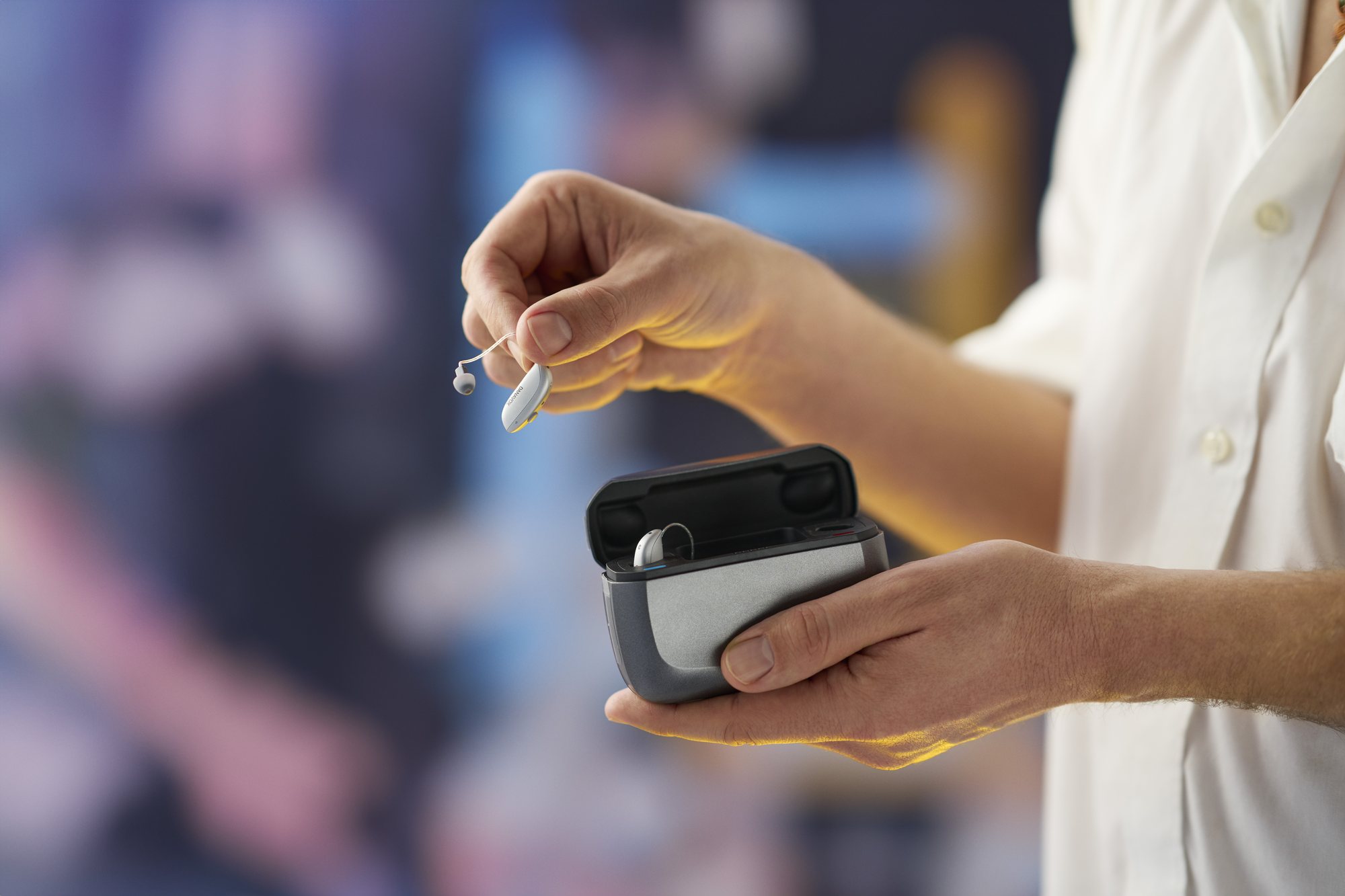
Rechargeable hearing aids have a built-in battery that you charge, usually overnight, in a charging case or stand. Disposable-battery hearing aids use small batteries that you replace when they run down. Both can work very well; the better choice depends on your daily routine, how easily you handle small parts, how often you travel and which hearing aid styles suit your hearing.
Many people find rechargeable models more convenient because there are no tiny batteries to change. Others prefer disposable batteries because a spare set can be carried anywhere and swapped in seconds. Your audiologist can help you weigh these points against your hearing results.
What is the difference between rechargeable and disposable-battery hearing aids?
A rechargeable hearing aid has a battery sealed inside it. You place the hearing aids in their charger when you are not wearing them, typically at night, and they are ready to use again in the morning. The battery is not something you change yourself; if it wears out over time, it is handled through your provider or the manufacturer.
A disposable-battery hearing aid uses small zinc-air button batteries. These batteries start working once a sticker tab is removed and air reaches them. When the battery runs low, the hearing aid usually gives a warning sound, and you replace it with a new one. Battery sizes differ between hearing aid styles, so you use the size your hearing aid needs.
How do they compare in daily life?
Convenience and routine
- Rechargeable: a simple habit of charging at night and wearing in the day. Well suited to people with a regular daily routine.
- Disposable batteries: no daily charging, but you need to keep spares and remember to replace them when they run down.
Handling and dexterity
- Rechargeable: no small batteries to open, insert or dispose of, which many people with limited finger movement, tremor or reduced eyesight find easier.
- Disposable batteries: changing a very small battery can be fiddly, especially in smaller hearing aid styles.
Power across the day
- How long a charge or a battery lasts depends on the hearing aid, the level of hearing loss and how much you stream audio from a phone or TV. Heavier streaming generally uses more power with either option.
- With a rechargeable model, many people simply charge each night. With disposable batteries, a spare can be swapped in at any time.
Travel and power cuts
- Rechargeable: you need to take the charger and a way to power it. Some chargers have their own built-in battery, which can help on trips.
- Disposable batteries: easy to carry spares, and you are not relying on a power socket.
Style options
Not every style is available in both versions. Very small in-canal designs, for example, may have fewer rechargeable options. You can browse the hearing aid catalogue, which includes rechargeable families, and ask our team about charging accessories such as the Danavox desktop charger.
Safety with disposable batteries
Button batteries are small and can be dangerous if swallowed. Keep new and used batteries out of reach of children and pets, store them in their original packaging, and dispose of used batteries safely. If you think a child or anyone else has swallowed a battery, seek urgent medical help immediately.
Which one suits you?
You may lean towards rechargeable if you:
- find small batteries hard to handle;
- like a simple nightly routine;
- would rather not keep buying and carrying batteries.
You may lean towards disposable batteries if you:
- travel often to places where charging may be difficult;
- prefer to swap in power anytime without waiting;
- need a style or power level where a disposable battery is the more suitable option.
The final decision is best made together with your audiologist during a Danavox hearing aid fitting consultation, where style, power needs and routine are considered together.
When to see a specialist
Book an appointment if you are choosing hearing aids for the first time, if your current hearing aids no longer last through your day, or if handling batteries has become difficult. These are good reasons to review your options in a hearing aid fitting consultation. You can book online or contact us by phone or WhatsApp.
If your hearing aids seem to stop working even with a fresh battery or a full charge, or if your hearing feels suddenly worse, do not assume it is the battery: get it checked, and see a doctor promptly for any sudden change in hearing.
Frequently asked questions
Do rechargeable hearing aids last a full day?
Many rechargeable hearing aids are designed to last through a typical day on a full charge. How long yours lasts depends on the model, your hearing loss and how much you stream audio. Your audiologist can explain what to expect from the specific model recommended for you.
Can I travel with rechargeable hearing aids?
Yes, many people travel with them. Pack the charger and its cable, and check that you will have a suitable way to power it at your destination. Because airline rules on batteries can differ, check with your airline before you fly.
Which is easier for limited dexterity?
Rechargeable hearing aids are often easier because you simply place them in the charger, with no small batteries to open or insert. Larger hearing aid styles can also be easier to handle. Mention any difficulty with your hands or eyesight during your appointment so it can guide the recommendation.
Related reading
- Hearing Aid Styles Compared: RIC, BTE, ITE and CIC
- Hearing Aid Batteries and Charging: Habits That Help Them Last
- How to Choose a Hearing Aid: Questions to Ask Before You Decide
Sources
This article is general information and does not replace advice from a qualified professional.