
Hearing Aid Styles Compared: RIC, BTE, ITE and CIC
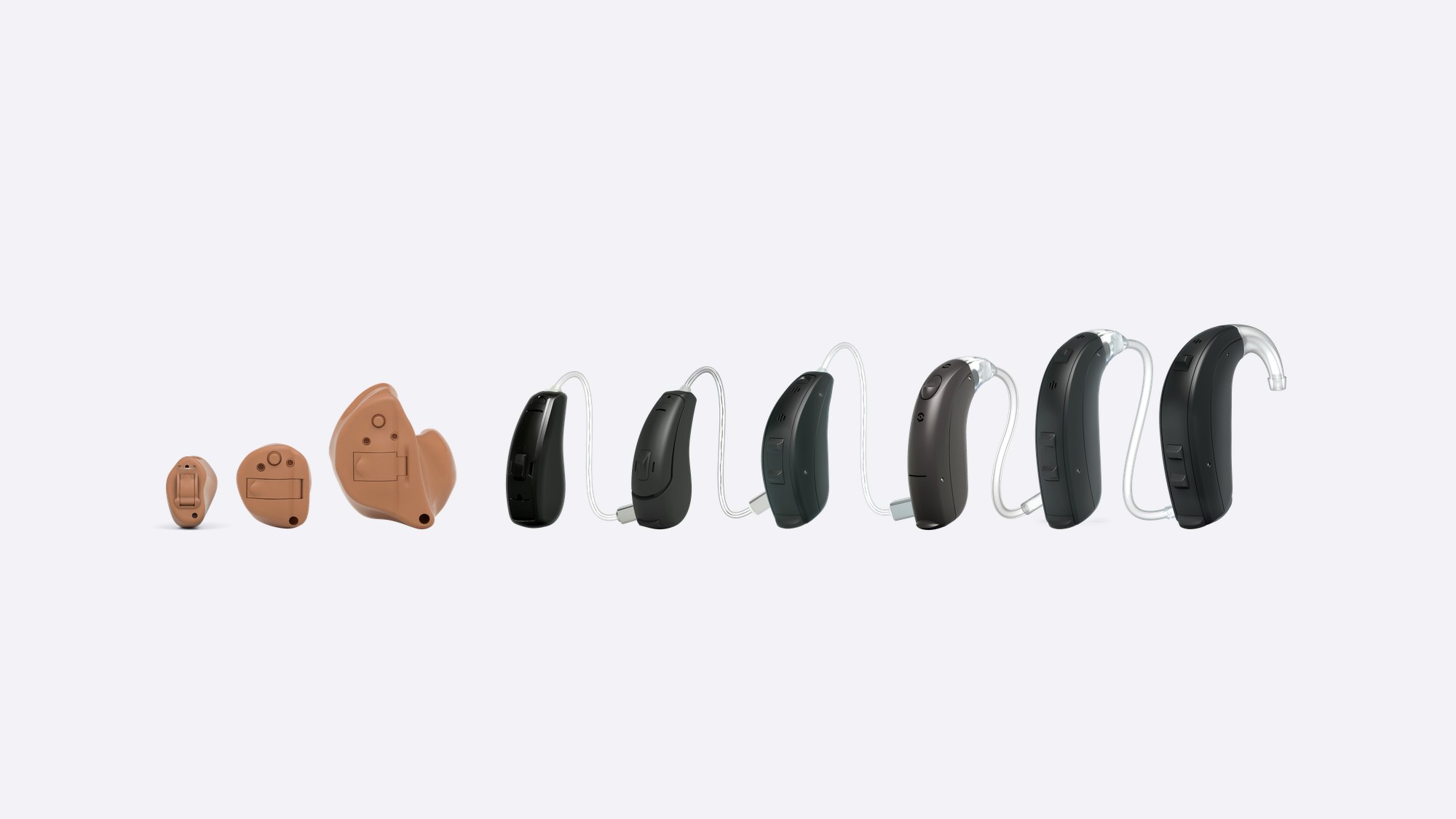
Hearing aids come in a few main styles: receiver-in-canal (RIC, also called RIE), behind-the-ear (BTE), in-the-ear (ITE) and completely-in-canal (CIC). They differ mainly in where the parts sit, how visible they are, how easy they are to handle and which degrees of hearing loss they usually suit.
No style is "best" for everyone. The right style depends on your hearing test results, the shape and size of your ear canal, how comfortable you are handling small objects, and how you spend your day. An audiologist weighs these together with you before recommending one.
What are hearing aid styles?
A hearing aid style describes the physical design: where the microphone, the processor and the speaker (called the receiver) are placed. Inside, most modern hearing aids work in a similar way: they pick up sound, process it digitally and deliver it into the ear at levels set for your hearing. The style changes the fit, the look and the practical handling more than the basic principle.
The main styles, side by side
Receiver-in-canal (RIC / RIE)
A small case sits behind the ear and a thin wire runs to a receiver placed in the ear canal, held by a soft dome or a custom tip.
- Usually discreet, because the part behind the ear is small and the wire is thin.
- Often feels open and light, which many people find comfortable.
- Suits a wide range of hearing losses, depending on the receiver chosen.
- The receiver sits in the canal, so it needs regular cleaning of wax guards and domes.
Behind-the-ear (BTE)
The whole hearing aid sits behind the ear and sound travels through a tube to an earmould or tip in the ear.
- Larger than a RIC, so it is easier to hold and handle.
- Has more room for power, so it is commonly used for more significant hearing loss, including power and super-power fittings.
- Often chosen for children, because earmoulds can be remade as the ear grows.
- More visible, although many people choose a colour close to their hair or skin.
In-the-ear (ITE)
A custom shell, made from an impression of your ear, fills part of the outer ear.
- Everything is in one piece, with nothing behind the ear, which some glasses wearers prefer.
- Larger than in-canal styles, so controls can be easier to reach.
- Usually suits mild to more significant hearing loss, depending on the design.
Completely-in-canal (CIC)
A very small custom device that sits deep in the ear canal.
- Among the least visible options.
- Its small size leaves less room for power, batteries and some features, so it usually suits milder to moderate hearing loss.
- Can be harder to insert, remove and clean, especially for people with limited finger movement or eyesight.
- Not every ear canal is large or straight enough to fit one comfortably.
How do you weigh the trade-offs?
Thinking about a few practical questions often narrows the choice quickly:
- What do your results show? The degree and pattern of your hearing loss rule some styles in or out.
- How easy is handling for you? Larger devices are generally easier for changing batteries, cleaning and inserting.
- How much does visibility matter? Smaller styles are more discreet, but discretion should not come before hearing well.
- Do you need features such as streaming or rechargeability? These are not available in every size.
- Do you wear glasses, a hijab or a headscarf? Comfort around the ear can influence the choice, so mention it during your appointment.
To see the range in one place, you can browse our hearing aid catalogue. As an authorised Danavox (GN Hearing) dealer in Oman, our catalogue includes families that cover RIC/RIE, BTE (including power and super-power), CIC and rechargeable designs, as well as a CROS option. Our product finder can help you shortlist options before you visit, and the final recommendation is made during a Danavox hearing aid fitting consultation once your hearing has been assessed.
When to see a specialist
Book a visit if you are considering hearing aids for the first time, if your current style is uncomfortable or hard to handle, or if your hearing seems to have changed since your last fitting. An up-to-date hearing test is the starting point for choosing a style, followed by a Danavox hearing aid fitting consultation. You can book an appointment or contact us by phone or WhatsApp, and you do not need a referral for a hearing assessment.
If you notice a sudden drop in hearing, ear pain with discharge, or dizziness with hearing loss, see a doctor promptly rather than waiting for a hearing aid appointment.
Frequently asked questions
Which hearing aid style is least visible?
Completely-in-canal (CIC) devices sit deepest in the ear and are usually the least visible, and small RIC devices are also very discreet. However, the least visible option is not always suitable for every hearing loss or ear canal. Your audiologist can tell you which discreet options fit your results.
Are small hearing aids weaker?
Smaller devices have less space for the receiver and battery, so they usually suit milder to moderate hearing loss. Larger styles such as BTE can generally provide more power. Small does not mean poor quality; it means the style should match the level of hearing support you need.
Which style is easiest to handle?
Larger styles, such as BTE and some ITE devices, are usually easiest to hold, insert and clean. Rechargeable designs can also help because there are no small batteries to change. If handling is a concern, say so at your appointment so it can guide the recommendation.
Related reading
- How to Choose a Hearing Aid: Questions to Ask Before You Decide
- Rechargeable vs Disposable-Battery Hearing Aids: Which Suits You?
- Hearing Aids: A Complete Guide to How They Work and Getting Started
- Hearing Aid Technology Levels Explained: What Changes Between Essential and Premium
Sources
This article is general information and does not replace advice from a qualified professional.